

Do You Have a Slipped Disc? Symptoms & How Physio Helps
Sharp back pain, tingling, or pain travelling down your leg could indicate a slipped disc — a common but highly treatable spinal condition.
Despite the name, a “slipped disc” does not actually slip. The condition typically refers to a disc bulge or herniation, where the soft inner material of a spinal disc pushes outward and irritates nearby nerves. With timely care, many individuals recover well without requiring surgery.
What is a Slipped Disc?
Spinal discs act as shock absorbers between the vertebrae. When a disc becomes damaged due to strain, degeneration, or sudden load, it may protrude beyond its normal boundary. This can compress adjacent nerves and lead to pain or neurological symptoms.
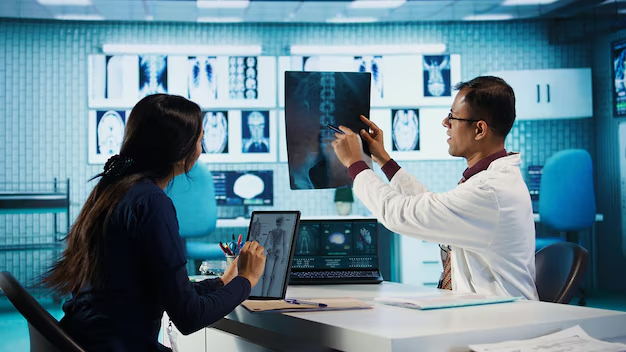
Common Symptoms You Should Not Ignore
1. Persistent Lower Back or Neck Pain
Localised pain is often the earliest sign. It may worsen with prolonged sitting, bending, coughing, or lifting.
2. Pain Radiating to the Arm or Leg
When a nerve is compressed, pain can travel beyond the spine — commonly down the leg (sciatica) or into the arm.
3. Numbness or Tingling
Altered sensation such as pins and needles suggests nerve irritation and should be evaluated early.
4. Muscle Weakness
Difficulty lifting the foot, gripping objects, or reduced limb strength may indicate more significant nerve involvement.
5. Pain That Worsens With Movement
Activities that increase spinal pressure — such as twisting or bending — may aggravate symptoms.
What Causes a Slipped Disc?
- Improper lifting techniques
- Prolonged sitting or poor posture
- Repetitive spinal loading
- Sudden trauma
- Age-related disc degeneration
- Weak core musculature
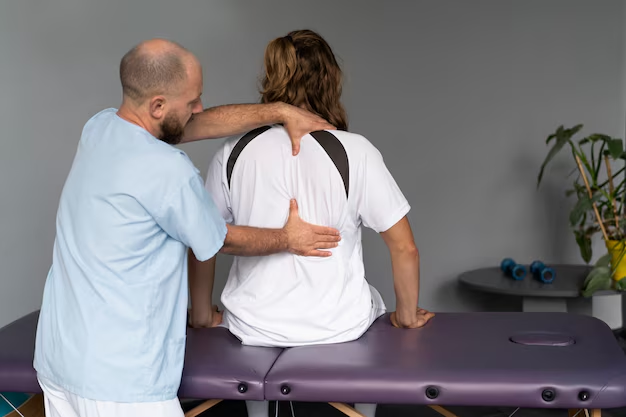
How Physiotherapy Helps
Physiotherapy is often the first-line treatment for slipped discs because it targets both symptom relief and the mechanical causes of spinal stress.
Pain Reduction and Inflammation Control
Early treatment focuses on relieving nerve irritation, reducing muscle spasm, and restoring comfortable movement.
Restoring Safe Mobility
Guided movements help prevent stiffness while protecting the spine during recovery.
Core Strengthening
Strong trunk muscles support the spine, reducing pressure on injured discs and lowering reinjury risk.
Postural Training
Correcting everyday movement patterns — from sitting to lifting — plays a major role in long-term spinal health.
Do All Slipped Discs Need Surgery?
No. The majority improve with conservative management. Surgery is typically considered only when severe neurological deficits, progressive weakness, or persistent pain fail to respond to structured rehabilitation.
Why Early Care Makes a Difference
Delaying treatment can prolong nerve irritation and lead to compensatory movement habits that strain other areas of the body. Early physiotherapy promotes faster recovery and helps prevent chronic pain patterns.
The YOS Health Approach
At YOS Health, we combine detailed clinical assessment with evidence-based rehabilitation to create personalised care pathways. Our goal is not just symptom relief — but restoring spinal resilience so you can return confidently to work, sport, and daily life.
Struggling With Back or Neck Pain?
Don’t ignore the warning signs. Early physiotherapy can significantly improve recovery.
Book AppointmentQuick FAQ
How long does a slipped disc take to heal?
Many individuals improve within 4–12 weeks with guided rehabilitation, though timelines vary depending on severity and adherence to therapy.
Should I rest completely?
Prolonged bed rest is rarely recommended. Controlled, therapeutic movement usually supports faster recovery.
Can physiotherapy prevent future disc problems?
Yes. Strengthening, posture correction, and movement education significantly reduce the likelihood of recurrence.