

Rotator Cuff Injury: Symptoms & Treatment Options
Shoulder pain that limits daily activities could indicate a rotator cuff injury — one of the most common causes of persistent shoulder dysfunction.
The rotator cuff plays a crucial role in stabilising the shoulder and enabling smooth arm movement. When these muscles or tendons become irritated or torn, even simple tasks like reaching overhead, lifting objects, or sleeping comfortably can become difficult.
What is the Rotator Cuff?
The rotator cuff is a group of four muscles and their tendons that surround the shoulder joint. Together, they keep the head of the upper arm bone securely positioned within the shoulder socket while allowing a wide range of motion.
Injuries may develop suddenly after trauma or gradually due to repetitive strain, poor biomechanics, or age-related degeneration.

Common Symptoms You Should Not Ignore
1. Persistent Shoulder Pain
A dull ache deep within the shoulder — particularly when lifting the arm or reaching behind the back — is often an early warning sign.
2. Pain at Night
Many patients notice worsening discomfort when lying on the affected shoulder, frequently disrupting sleep.
3. Weakness When Lifting or Rotating the Arm
Difficulty lifting everyday items or reduced strength during overhead movements may indicate tendon involvement.
4. Limited Range of Motion
Stiffness or the inability to move the arm freely can significantly affect work, sports, and daily function.
5. Clicking or Catching Sensation
Some individuals experience mechanical symptoms when moving the shoulder, suggesting structural irritation.
What Causes Rotator Cuff Injuries?
- Repetitive overhead activities (sports, manual work)
- Sudden lifting injuries
- Poor posture and shoulder mechanics
- Age-related tendon wear
- Muscle imbalance or weakness
Treatment Options
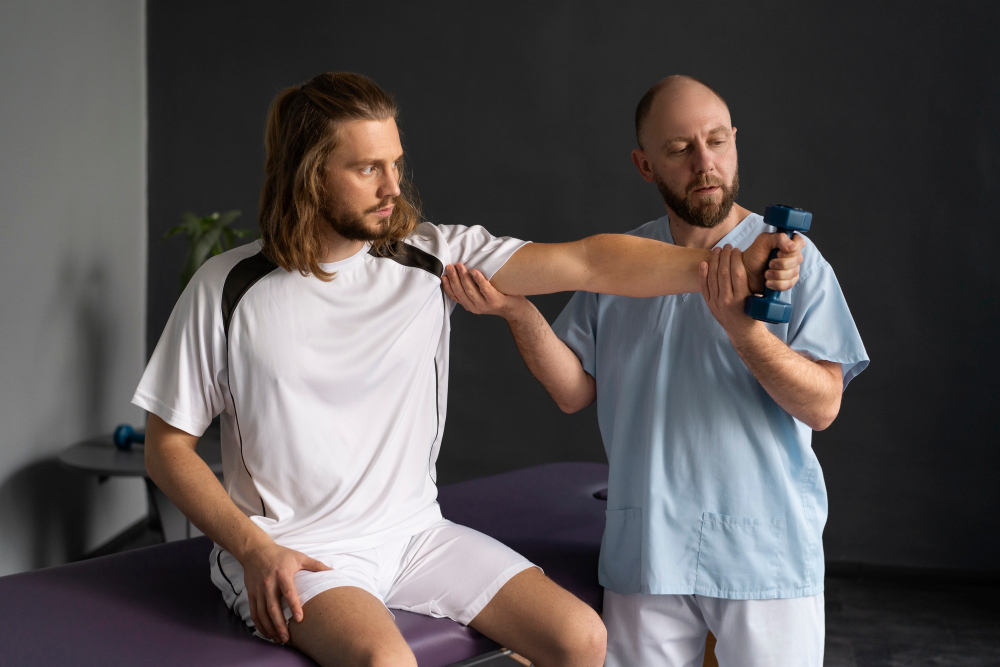
Physiotherapy — The First Line of Care
Most rotator cuff injuries respond well to structured physiotherapy. Early treatment focuses on reducing pain and inflammation while restoring controlled mobility.
As recovery progresses, strengthening exercises target the shoulder stabilisers, improving joint mechanics and preventing recurrence.
- Manual therapy to improve joint mobility
- Progressive strengthening programmes
- Movement retraining
- Postural correction
- Sport- or work-specific rehabilitation
When is Surgery Considered?
Surgical intervention may be recommended for full-thickness tears, significant functional loss, or cases that do not improve with conservative management. Post-operative physiotherapy is essential to restore strength and optimise outcomes.
Why Early Treatment Matters
Ignoring shoulder pain can lead to worsening tears, prolonged stiffness, and compensatory movement patterns that strain other joints. Early physiotherapy often shortens recovery time and reduces the likelihood of invasive procedures.
The YOS Health Approach
At YOS Health, we emphasise precise diagnosis and personalised rehabilitation. Our clinicians design targeted programmes that address the root cause of dysfunction — helping you regain strength, restore mobility, and return confidently to your daily activities.
Shoulder Pain Holding You Back?
Early assessment leads to better outcomes. Book a physiotherapy evaluation with our specialists today.
Book AppointmentQuick FAQ
Can a rotator cuff injury heal without surgery?
Yes — many partial tears and inflammatory conditions improve significantly with guided physiotherapy and progressive strengthening.
How long does recovery take?
Mild injuries may improve within weeks, while more complex cases can take several months. Consistency with rehabilitation is a major predictor of recovery speed.
Should I exercise if my shoulder hurts?
The right exercises promote healing, but incorrect loading can worsen symptoms. Always follow a physiotherapist-guided programme.